Have you noticed that modern day fad of wearing your trousers too low? Today’s trousers are often worn at the hips, or even lower, which can be quite disturbing! This practice has carried over into the living history world, unfortunately, and you can easily spot reenactors with three of four inches between the trouser waistband and the top of the vest. Or the corpulent reenactor, having put some weight on, with trousers hanging below the belly. Has this ever happened to you? It is relatively easy to avoid this fate, and in this post we will go into some of the ways to improve the fit of your trousers.
A Quick Study of Period Trousers
To begin with, let’s take a look at a few photographs from the period. By studying original garments you can get idea for the way they were worn, constructed, and fit.
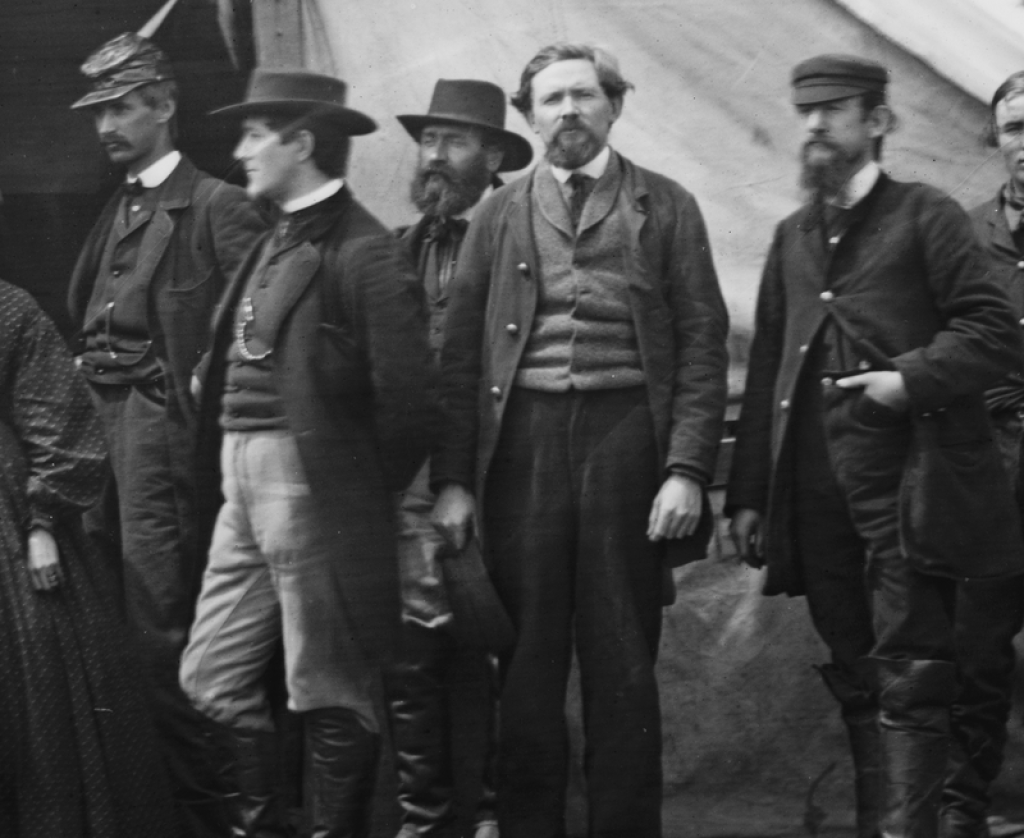
In the first photograph, notice how the waistbands of the trousers are all covered by the waistcoats. I particularly like the lighter coloured trousers, as they lend a certain contrast and interest to the rest of his ensemble.
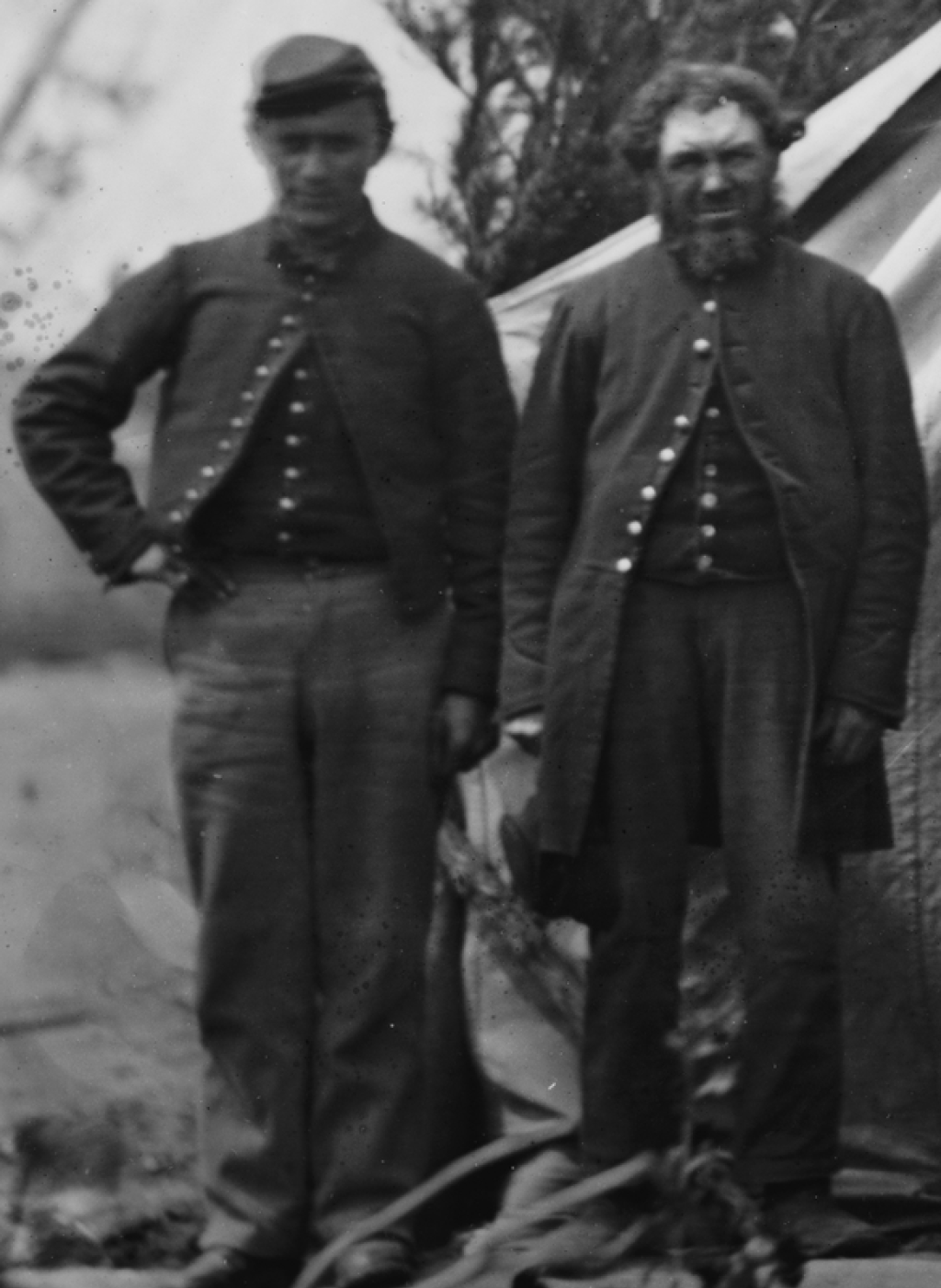
Here I included what appears to be two enlisted men, due to the nice view of the trousers and waistcoat. As you can see, they are fairly baggy, as was the style during the 1860s.
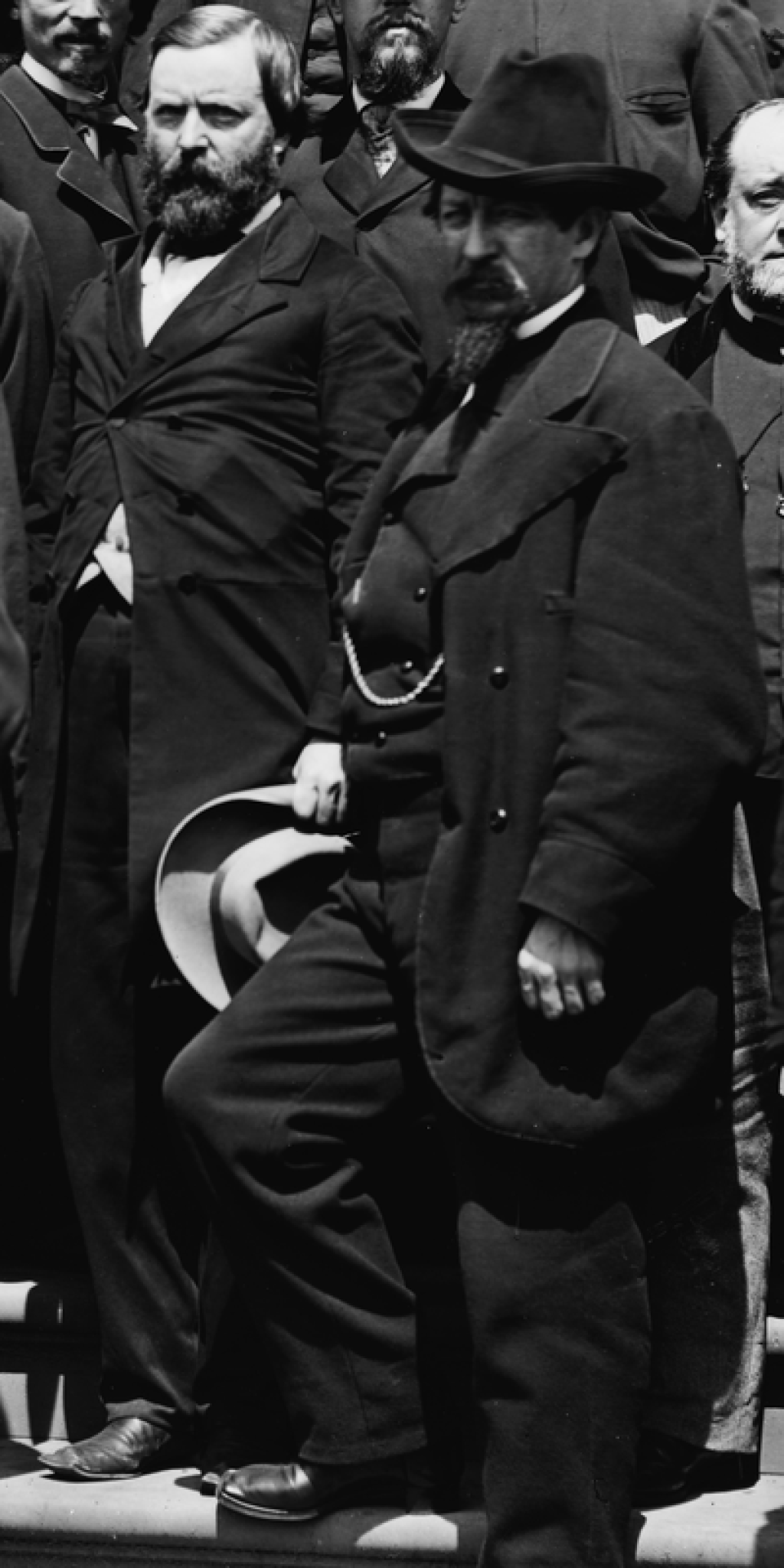
In the following photo, you can see a hideous example of a frock coat on the left. He seems to have something very bulky in his pocket. Combined that with being too tight across the chest, it looks very sloppy. It was most likely not made for him. The waistcoat peeking out beneath the coat looks much nicer, however, and again note that it covers the waistband of the trousers. The gentleman on the right is wearing fairly baggy clothing. Look at those huge lapels! But no hint of a shirt in the waist area.
Here is a gentleman wearing a silk shawl-collared waistcoat, again covering the tops of the trousers. Waistcoats were cut a little longer than natural waist, while trousers were cut right up to the natural waist.
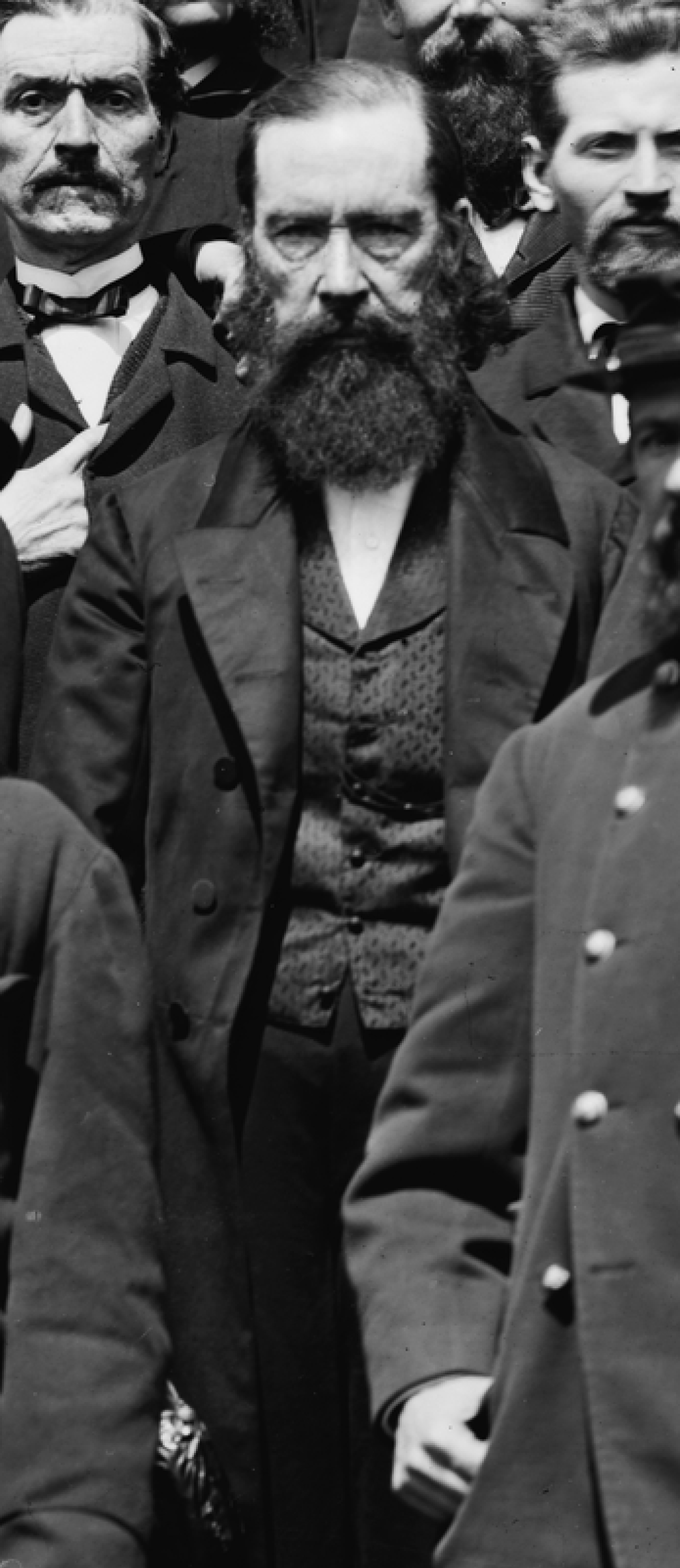
This man’s vest is almost entirely unbuttoned. Nice fit of the trousers, and note the curved corners on the waistcoat front. You can still stylize without compromising fit.
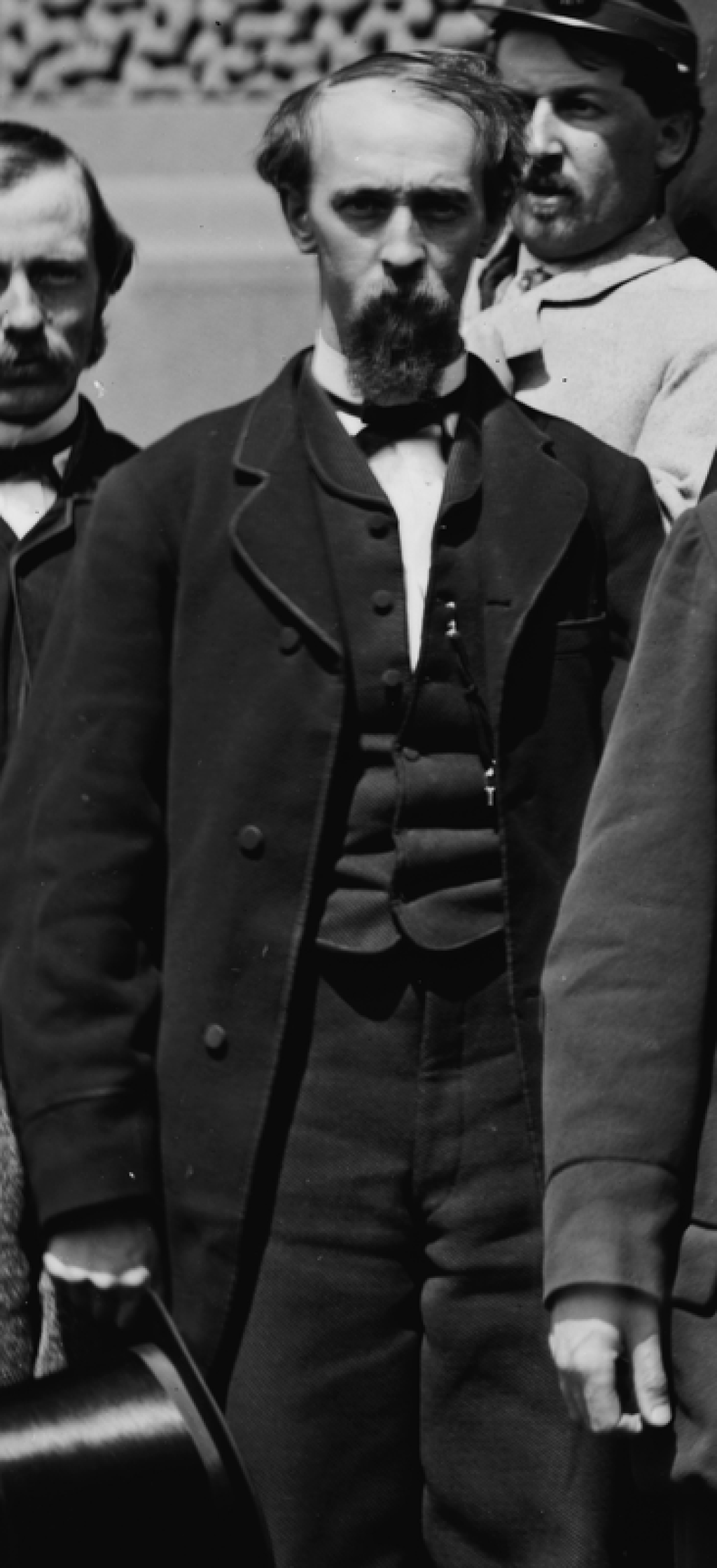
Check out the fabric on these matching trousers and waistcoats. Very unusual! It looks almost like a tweed to me
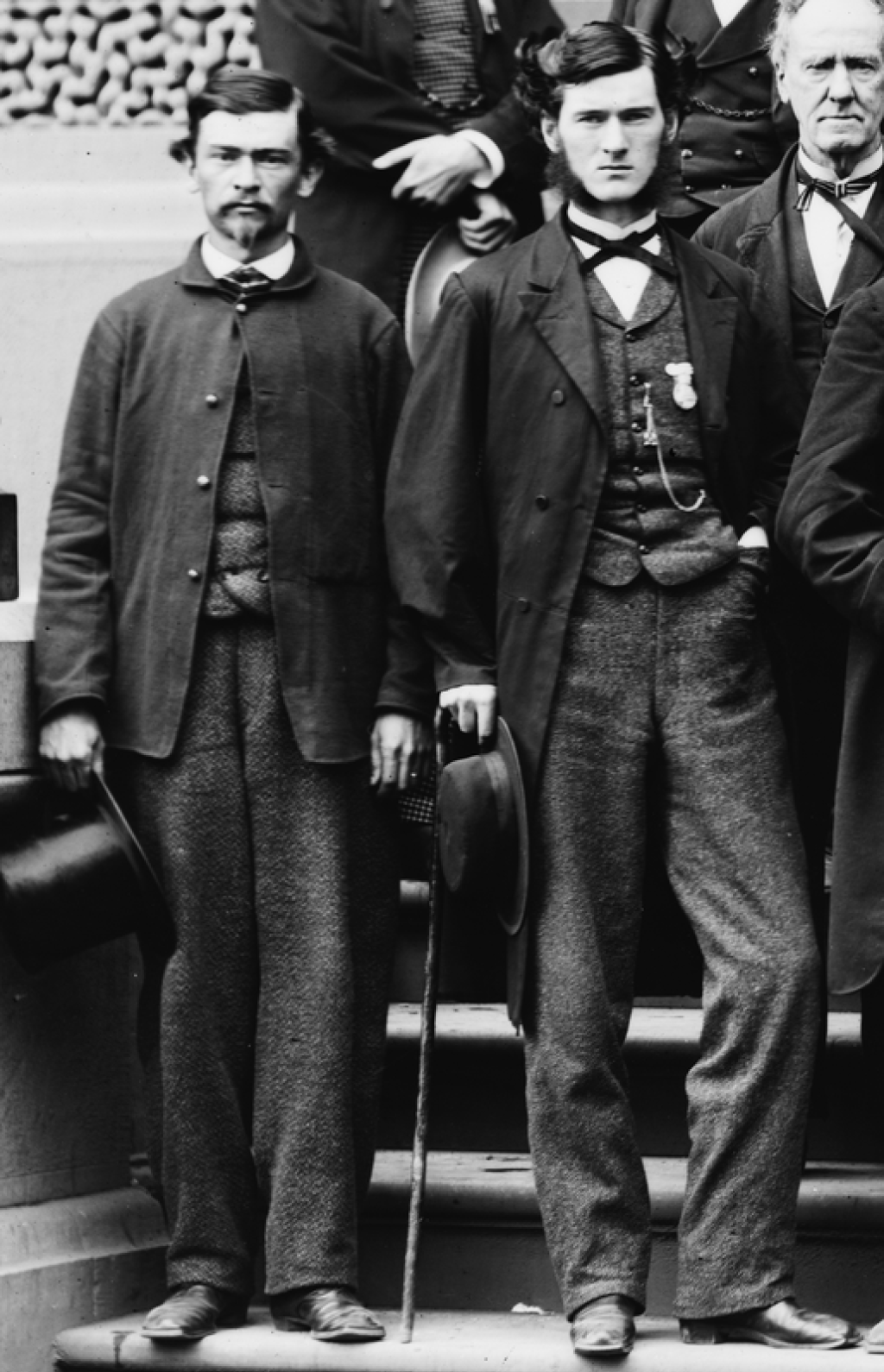
I like the fit of these trousers the best out of any pictured so far. Notice there are no breaks or wrinkles in the fabric. The hem is nicely done, and the trousers are not overly baggy. Another benefit of wearing your trousers at the proper height is to give yourself an illusion of height. Very good for shorter people. In this example, they appear to be made of a wool broadcloth.
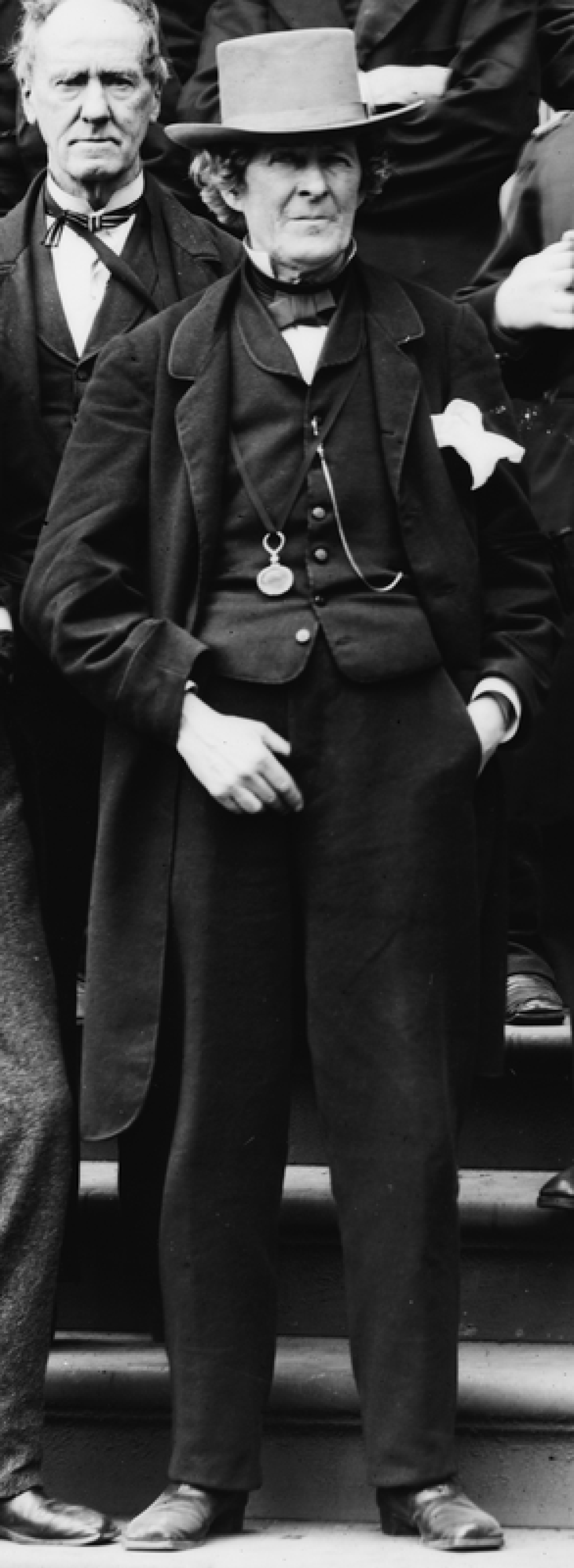
These trousers are nicely fitted as well. The man on the left has his vest buttons undone, and you can see precisely where the trousers hang on the waist. While you can’t see much of the other gentleman’s trousers, notice the nice length on the hem, and how they seem to taper down to the ankles. It was very fashionable to wear ‘peg-top’ trousers that were very baggy, tapering down to a narrow bottom. He’s wearing a very nice top coat, as well.
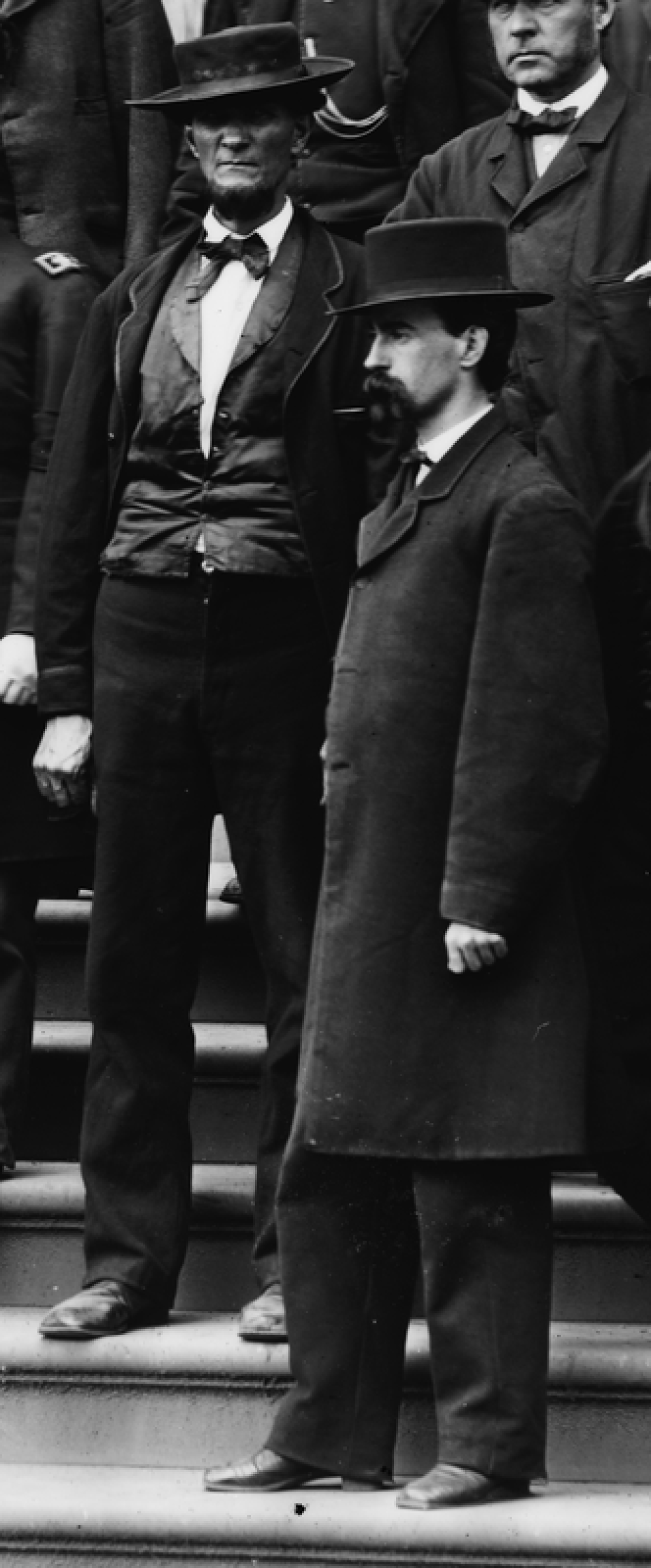
Here is a very well-dressed gentleman. I love the fit of the coat. Again, study the relationship between vest and trousers, and how they interact with each other.
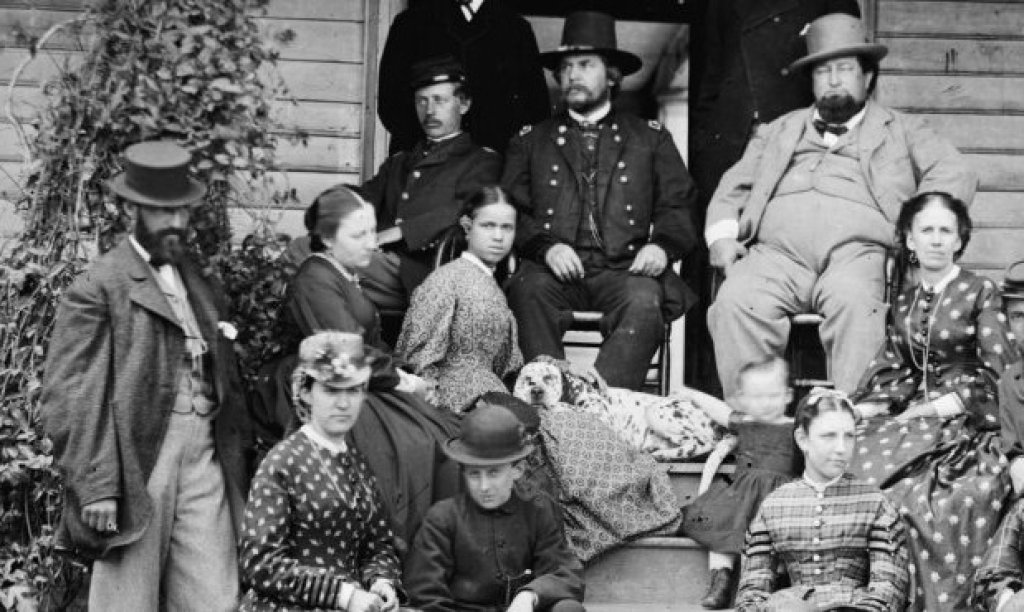
Finally, here is a period photograph showing several corpulent gentlemen. Notice how the trousers rise over the stomach, just as they do in the other photos. This gives a slimming affect, and makes the wearer appear slightly taller.
Getting the Correct Fit
Getting trousers that fit correctly can sometimes be a challenge. If purchasing a ready-to-wear pair of trousers, you will very rarely find something that fits you properly. These trousers are either based on average measurements, or are sometimes graded up or down in size from original patterns. The problem arises because people are very rarely the same size and shape as the patterns. If you are one of those lucky people with a proportionate body, then by all means go with these types of trousers. If not, however, you will always find some defect in the fit.
When trying on a pair of trousers, you must wear them at the natural waist, located about the level of the navel. In the back of the trousers, the waistband should rise up two or three inches (this is somewhat variable), in order to facilitate the use of braces. I prefer to cut my trouser backs on the higher side, so that they cover the small of the back completely. The waist should be somewhat fitted, but not completely tight. And when following period drafts, such as Devere, you will find the back seat area to be rather loose. This allows range of movement, and the extra fabric is hidden by a coat.